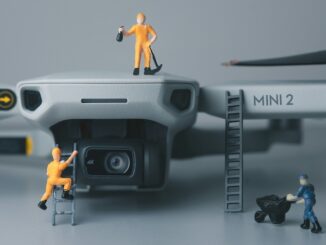



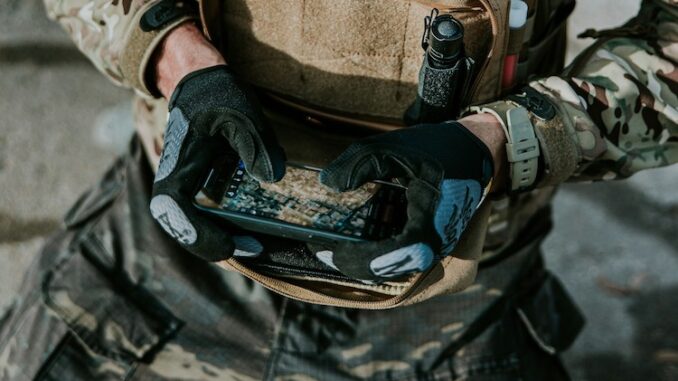
Preparing for the remotely fought battlefield will require the NZDF to take a new approach to simulation, wargaming and the development and testing of drone and counter drone technologies, writes former New Zealand Army officer Graeme Doull.
New Zealand’s Defence Force is on the cusp of a once-in-a-generation investment. The Government has proposed a conservative and conventional defence budget, distributing funds broadly across many areas, with only a modest commitment to new technologies.
It appears to be a plan shaped by competing bids, compromises, and trade-offs – money spread fairly, with a focus on replacing and maintaining existing assets and capabilities.
Yet warfare in the 21st century is anything but conventional. Success increasingly depends on rapid innovation and close integration between operational units and technology partners. Technology has transformed tactics. Both have evolved together through the unforgiving Darwinism of the battlefield.
The nature of conflict has changed. Drone and counter-drone warfare now dominates, with forces rarely operating at company or larger unit levels. The remotely fought battlefield has become the norm, where soldiers often engage not with other soldiers, but with machines.
“The investment outlined in the Budget offers a rare opportunity to be bold, to think beyond the conventional, and to build a force truly capable of meeting the challenges of the modern battlefield.”
So how should the Army prepare? First, by learning from active conflict zones – Ukraine, Sudan, Kashmir, and other flashpoints. But that’s just the beginning.
Capability must evolve through competition. While we don’t have the crucible of combat to shape our forces, we can create a competitive environment and adopt agile development methods, working in tight collaboration with technology partners to wage drone and counter-drone warfare.
This isn’t about buying a few drones and bolting them onto an existing force structure. This is about building an entirely new capability.
We need hundreds of uniformed drone technicians and operators, supported by an equal number of civilian engineers developing new drones and counter-drone systems. Success should be measured not in platforms purchased, but in thousands of bombs dropped and hundreds of drones neutralised annually.
Simulation, opposed exercises, and wargaming must become core Army activities. Units should serve as each other’s opposing forces, with technological success rewarded by direct investment.
We should see continuous cycles of technology and tactics evolving – being proven, defeated, refined, and replaced in rapid succession. Rather than relying on static frameworks and assumptions, we must embrace iterative, real-world experimentation. Units must be empowered to innovate – in both technology and tactics.
We should actively harness the diverse perspectives and experience of the Reserve Force to challenge the Regular Army’s thinking. Technology partners should be embedded at the unit level, developing and testing low-cost, mass-produced drone and counter-drone platforms as fast as the technology allows. The drone battle should be fought as realistically as possible: human vs machine, chalk bombs instead of grenades, but live rounds for human participants to test systems under genuine pressure.
The Defence 2025 budget includes reference to spending for counter unmanned aerial systems (C-UAS) – without providing details. At the risk of being pessimistic, this has the sound of many other previous NZDF investments where a system is purchased but we have failed to develop a capability, with the actual system safely held in storage untouched until the weapons expire.
Modern warfare has fundamentally changed. Our approach must evolve accordingly. The investment outlined in the Budget offers a rare opportunity to be bold, to think beyond the conventional, and to build a force truly capable of meeting the challenges of the modern battlefield. Conservative strategies will not suffice. To be ready, we must think differently – and act decisively.
Buying a system is not developing a capability. Drone and counter drone needs to be a new way of working for the NZDF, not a toy wheeled out for visiting dignitaries and school groups. Waiouru nights should be lit up by drone and counter drone fire rivalling Tehran or Tel Aviv.