


The latest NZDF unit amalgamation presents both a loss of capability and a lack of respect for tradition, writes former NZ Army officer Graeme Doull.
The NZ Army has amalgamated two of its three Regular Force manoeuvre units. While this appears to be the largest reduction in Army capability in a generation, it is actually an acknowledgement that the current units were unsustainable, most likely driven by the ongoing crisis in recruitment and retention.
Manoeuvre units matter. They are the Army’s core combat elements, distinct from combat support (such as engineers and artillery) and combat service support (logistics, medical, etc).
While these units have been undermanned for decades, formal amalgamation removes more than personnel. It strips away unit structures, institutional knowledge, and frameworks that could otherwise have been reconstituted if, and when, additional resources were made available.
There is also a significant loss of capability. The Army’s only cavalry unit has been folded into a mounted infantry role, a function that is markedly less complex and less dynamic.
“As it stands, this decision feels like a triumph of process thinking over strategic vision, with short-term penny-pinching taking precedence over a coherent long-term view.”
Modern cavalry performs a medium-range reconnaissance role, operating armoured elements with a high degree of independence and skill. These troops conduct screening, surveillance, raids, route reconnaissance, and vital point security. This unit – and its skill set – would have been a natural home for medium-range drones, building on existing technical and tactical competence.
Motorised infantry is a different discipline. Armoured vehicles are used primarily to deliver infantry to the fight, which is then conducted dismounted. This role is generally more tightly integrated into larger formations and allows for less independence at sub-unit level.
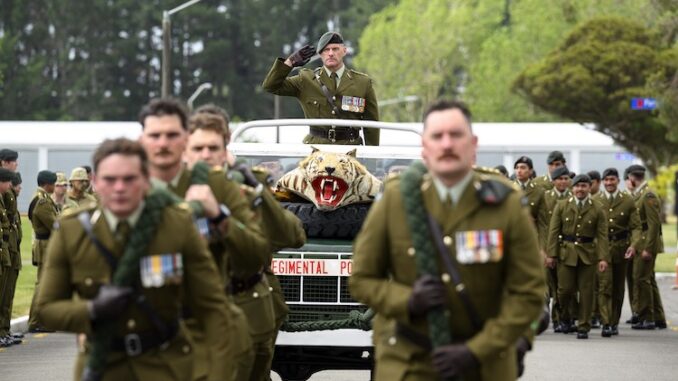
The amalgamation also reflects a lack of respect for long-established military tradition. Typically, the senior unit’s name is retained, with elements of the junior unit preserved at the sub-unit level. In this case, Queen Alexandra’s Mounted Rifles was absorbed into 1st Battalion.
Queen Alexandra’s Mounted Rifles traces its origins to 1864, while 1st Battalion was formed in 1957. QAMR’s heritage as a “Mounted Rifles” unit – the historical equivalent of a motorised battalion – would have made it an entirely appropriate name for the new formation. It’s difficult to understand how anyone could justify why QAMR was subsumed into 1st Battalion.
As the Army rebuilds and additional resources are made available, I hope this amalgamation is reconsidered in the near future, and that these lost capabilities can be regenerated.
As it stands, this decision feels like a triumph of process thinking over strategic vision, with short-term penny-pinching taking precedence over a coherent long-term view.