




With recent developments in manned and unmanned teaming (MUM-T) demonstrating its utility for defence and commercial aviators, there’s opportunity for New Zealand, write Josh Wineera and Derek Tunui.
First there were manned aircraft. Less than two decades after the Wright Brothers flew, pilotless aircraft were being developed during World War 1 by both American and British designers. This included Archibald Low’s radio control system that guided a de Havilland’s monoplane in March 1917. Low has been referred to as the ”Father of the remotely piloted vehicle”.
It should be no surprise then that 100 years later, combining the two, teaming them to achieve success, is a natural evolution in aviation.
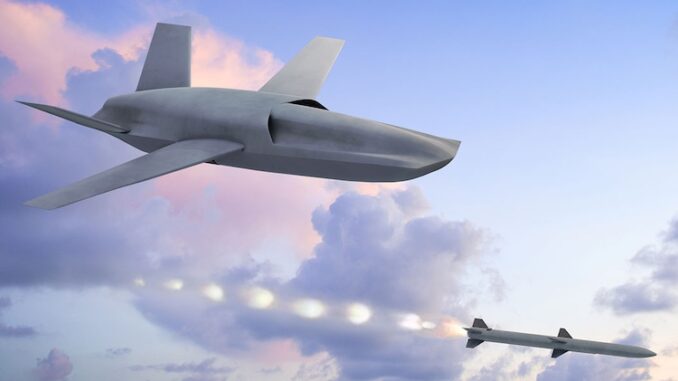
As is commonly the way, military developments paired with advanced technologies, are leading in what has many descriptions – manned and unmanned teaming (MUM-T), collaborative combat aircraft (CCA), Loyal Wingman, and others.
“Examples of a growing number of non-military sectors considering MUM-T to unlock safer, more precise and scalable methods of operation will include border control and maritime surveillance.”
What is clear is that the advancement in this field has drawn the attention and serious investment of some of the global defence industry heavyweights, with all eyes on who will be first to market with their sixth-generation fighter.
Earlier this year, Boeing’s successful bid sealed a US Government deal of $20Bn to develop the F-47, the successor to the F-22 Raptor. France, Germany and Spain are collaborating on the Future Combat Air System (FCAS) through Dassault, Airbus, and Indra Sistemas – the successor to the Rafale and Typhoon.
In June, the United Kingdom, Japan, and Italy accelerated their ‘Tempest’ design, with a formal commitment between BAE, Leonardo and Japan Industrial Enhancement Co to replace the Typhoon and F-2. South Korea’s KAI Aerospace is onboard, and India is exploring options, while China’s much publicised future combat aircraft programme remains a key motivator for Western sixth-generation programmes.
But stealth technology, AI advancements and composite material aren’t cheap. When these fighters are fielded through the 2030s global sales are likely to be in the trillions.
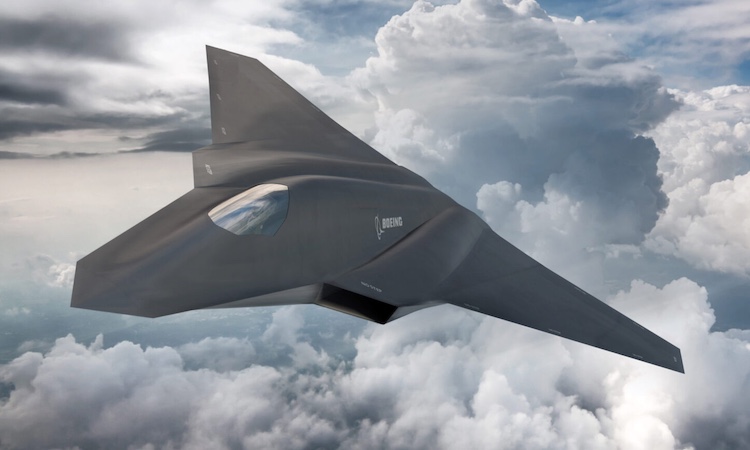
Rendering of a Boeing F-47. Image: Boeing.
A question lies beyond the hardware and software. How does the human factor of manned and unmanned teaming prepare?
Top-tier flight facilities in Europe, China and the US are developing sixth generation pilot training that will combine air space management, autonomous mission orders, threat avoidance and engagement systems operation over traditional pilot operations. AI will play a central role. The pilot may become more of a mission commander and systems integrator than a pure pilot.
In New Zealand, Manned-Unmanned Teaming (MUM-T) ought to be an expected capability in the near future across the surveillance and strike functions. This is particularly relevant for the $2 billion maritime helicopter project, and long-range strike and surveillance acquisitions across multiple domains.
An article in the Autumn 2025 issue of Line of Defence titled Collaborative Combat Aircraft in the Royal New Zealand Air Force, concluded that “consideration could be given to the utility of a CCA capability flying independently and/or in conjunction with the RNZAF’s P-8 Poseidon or other similar aircraft.”
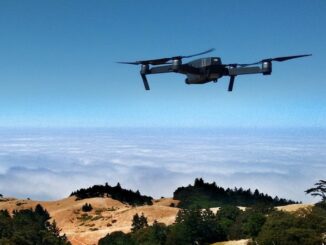
The applications of teaming extend well beyond air combat. Several industries and sectors, including Airbus are already exploring teaming. Airbus Helicopters’ CE, Bruno Even speaking on an EU-funded project (MUSHER) to develop a full-scale demonstration of a MUM-T system, pointed out that the aim of this was to harness Europe’s industrial know-how, and demonstrate the benefit and practicality of MUM-T for military and civil applications.
Examples of a growing number of non-military sectors considering MUM-T to unlock safer, more precise and scalable methods of operation will include border control and maritime surveillance.
Agriculture is another, with precision farming operations experimenting with MUM-T concepts to combine piloted crop dusters with drone-based sensors and delivery systems for optimised spraying and monitoring, livestock management and infrastructure inspection.
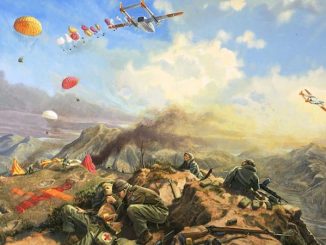
Emergency services and disaster response will see piloted aircraft coordinate with drones to map fire perimeters, detect hotspots and guide suppression efforts. In search and rescue operations, manned aircraft scan wide areas, while drones access hard to reach zones using thermal imaging and GPS to locate survivors.
However, there is still a reliance on separation for safe integration of ‘M’ with ‘UM’ – separation in horizontal or vertical axes and/or by time. In sports parlance, opposing teams are kept on separate sides of the field with direction largely flowing from one side, and information from the other.
Today, the ‘T’ in MUM-T is the prize. Indeed, human aviators are no longer alone on defence or commercial missions. MUM-T is a Team space, with high degrees of integration over separation, two-way information and direction, and hierarchical layers of “M’ and ‘UM’ forming real MUM-T with a hard emphasis on the ‘T’.
As autonomous technologies and regulatory frameworks continue to evolve, MUM-T is showing its place for essential missions for defence and commercial aviators. Its fundamental logic is to bridge the human factor with unmanned intelligent support to deliver services in smarter and more sustainable ways.
Given this evolution, does New Zealand have the technical and intellectual curiosity to explore MUM-T?