




According to the 2026 trends report by Motorola Solutions / Avigilon, pairing innovative tech with surveillance systems and advanced AI analytics will make it easier to monitor and manage access while analysing patterns and trends.
The recently released report lists eight top trends for access control in the coming year, including:
1. Touchless entry and access technology
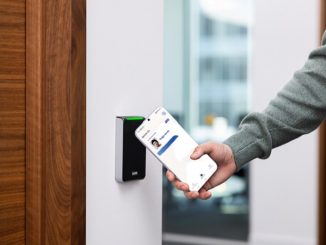
Touchless access is becoming increasingly popular fir achieving safety and convenience in high traffic public and commercial spaces. Touchless entry to eliminate the need for physical contact or credentials at the door.
According to the report, touchless technologies will continue to see increased adoption throughout 2026, benefitting operations via improved physical signal configuration and motion sensing technology, enhanced mobile experiences, and biometric technologies.
2. Remote management and security
Remote security and remote access management first gained traction in enabling building owners to secure their premises even while unoccupied. This gave businesses the ability to keep their buildings open while supporting hybrid working environments.
“Remote security’s primary benefit is that it allows organisations to maintain flexibility regardless of where their teams are located,” states the report. “With anywhere access, teams no longer have to worry about time wasted during critical security events. User permissions and door schedules can be adjusted at any time, with those changes taking effect instantly.”
3. Unified security systems
By merging multiple systems’ capabilities, a wider range of technologies can be optimised to enhance overall user experience while supporting building managers and owners to achieve energy-efficiency, productivity and sustainability goals.
The move toward unification is also driving access control hardware consolidation. “Instead of separate readers, cameras and intercoms, the market is shifting toward all-in-one devices,” states the report.
“Modern access control readers often include built-in high-definition cameras, video intercom technology and two-way audio, streamlining installation and providing richer data for the unified platform.”
4. AI-powered automation
Artificial intelligence (AI) will reduce the need of having individuals monitor security system feeds 24/7. While AI-enabled security cameras may not necessarily replace human verification, they can be invaluable in helping security teams know where to focus their efforts and when to act.
Data ingested from integrated systems can be analysed and provide key insights into an organisation’s operations, helping teams more quickly identify anomalies and triggering specific workflows or processes.
“One example of this access control technology trend is using rules to trigger lockdowns, alarms or alerts following a specified access control event,” states the report.
“This type of automation can be crucial in minimizing damages in an emergency. Still, it is also just as effective in helping teams more effectively triage daily incidents, such as lockouts or doors left ajar.”
5. Cybersecurity and data privacy
Organisations are increasingly aware that a breach in their access control network is just as dangerous, if not more so, than a physical security breach. A hacker who gains remote access could unlock every sensitive door in a facility simultaneously.
“This focus demands a multi-layered defence,” states the report. “Key measures include robust end-to-end encryption for all data, whether it’s stored (at rest) or being sent over the network (in transit).
“It also means implementing secure credential provisioning, especially for mobile, to prevent cloning. Proactive strategies like regular vulnerability testing and penetration audits are becoming standard.”
Additionally, organisations must ensure that their vendors strictly comply with data privacy regulations. “Protecting access credentials from theft has evolved from an IT problem into a core pillar of workplace security.”
6. Multi-factor authentication
Multi-factor authentication (MFA) is becoming increasingly popular due to its increased security and reliability. MFA in physical access control requires multiple types of authentication prior to granting access, making it more difficult for unauthorised users to gain unauthorised access to buildings or networks.
MFA requires individuals to present multiple credentials at each entry point. In mobile applications, users may need to use Face or passcode to unlock their phone and an app to request an unlock.
Many access control systems also add PIN codes or key cards to mobile authentication in a multi-layered approach to securing high-risk areas.
7. Cloud-based systems
According to the report, cloud-based security and access control solutions are scalable since they allow organisations to control multiple sites from a central location.
They enable teams to respond to security breaches faster and more accurately and to observe and process data across multiple sites and locations in one place, making multi-site access management more efficient.
“While cloud-native access control offers compelling advantages, it’s not a universal solution,” states the report.
“Industries with strict security regulations or those with significant investments in existing infrastructure may find it impractical. Instead, the future of access control likely lies in hybrid cloud systems. This approach allows businesses to leverage the benefits of cloud storage, real-time alerts and remote monitoring, while retaining their on-premise servers.”
8. Data-driven insights for workplace optimisation
By analysing detailed occupancy patterns over time, organisations can gain a clear, objective picture of how their buildings are being used, enabling them to optimise their real estate footprint based on evidence.
“For example, the data might reveal that a specific floor is consistently underutilised, prompting a consolidation rather than an expensive lease renewal,” states the report.
“Companies can also more effectively manage energy consumption by integrating access data with building management systems, automatically dimming lights or adjusting HVAC in empty sections.”
Such data provides authoritative insights into which spaces are most used, when peak usage times are and how different departments interact with the workplace. “Equipped with this information, leaders can make smarter decisions about resource allocation and future workplace design, transforming the physical security system into a strategic asset for driving operational efficiency.”