



We once knew it as the ‘Asia Pacific’ region, but since 2017 it’s become known as the ‘Indo-Pacific’ – a small name change with far-reaching implications, writes Nicholas Dynon.
New Zealand’s Defence White Paper 2016 characterised China as “an important strategic partner for New Zealand”. Five years later when Defence Assessment 2021 was released under Defence Minister Ron Mark, China was no longer a strategic partner but a ‘strategic competitor’.
The Defence Assessment noted a deteriorating strategic environment marked by increasing security threats and the key challenge of strategic competition, which it saw as “playing out globally, including in New Zealand’s immediate neighbourhood, with direct implications for New Zealand’s security and wellbeing.”
The document also marked the first adoption in a New Zealand defence assessment or policy statement of the term ‘Indo-Pacific’.
Previously, the Strategic Defence Policy Statement 2018 had mentioned Indo-Pacific in relation to the use of the term in Australia’s 2017 Foreign Policy White Paper, Japan’s Free and Open Indo-Pacific Policy, and the promotion of ‘Indo-Pacific concepts’ by Japan, Australia, and the US, but it had not adopted it, preferring the conventional term ‘Asia-Pacific’.
“It will likely have real-world implications for many years to come… and we may not like many of them.”
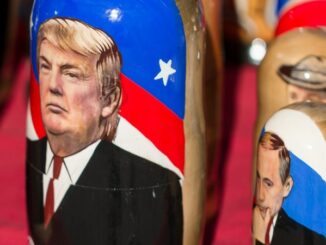
Meanwhile, the Indo-Pacific concept had been rapidly adopted by the Trump Administration and US partner political leaders following a state visit to the US by Indian Prime Minister Narendra Modi in June 2017. A Trump-Modi joint statement described their countries as “responsible stewards in the Indo-Pacific region”.
Since then, the term has featured prominently in US, Australian and – more recently – New Zealand defence and national security documents, It appeared 31 times in the 2021 Defence Assessment, including in this explanatory note:
The “Indo-Pacific”, which broadly encompasses the Indian and Pacific Oceans, is increasingly used in security contexts in preference to other concepts and terms, such as the “Asia Pacific”. Accordingly, we have used Indo-Pacific in this Assessment.
With that, we have relegated the Asia Pacific region to history.
A region of threat
The US 2017 National Security Strategy marks the moment in which the Asia Pacific region’s benign characterisation was replaced with the impending dread of a new Indo-Pacific reality.
“For decades, US policy was rooted in the belief that support for China’s rise and for its integration into the post-war international order would liberalize China,” states the Strategy. Yet, it continues, “China seeks to displace the United States in the Indo-Pacific region, expand the reaches of its state-driven economic model, and reorder the region in its favor”.
The belief in China’s eventual liberalisation and the US’ policy of engagement towards China up until that point was famously referred to by American political scientist John Mearsheimer as the “worst strategic blunder any country has made in recent history”.
The 2017 identification of China by the first Trump administration as a threat and the formal adoption of the Indo-Pacific concept into US security policy changed the policy calculus. It was by no means the start of this process, but it most definitely punctuated it.
An Indo-Pacific state of mind
Nicholas Ross Smith and Paul Bacon write that the Indo-Pacific should be thought of not as a region but rather as an attempt at multi-country ‘macrosecuritisation’ to frame China’s rise as an existential threat to the rules-based international order.
Securitisation is the idea that an issue can be reframed and presented by political leaders as an existential threat requiring the use extraordinary means to deal with it. In the case of ‘Indo-Pacific’, they write, the concept “is firstly intended to frame China as a challenge, rival or enemy, and secondly to encourage like-minded states to feel that they need to join together to address this threat.”
According to Smith and Bacon, the decision by the US to adopt the Indo-Pacific concept and identify China as a strategic competitor had immediate real-world implications, not least the resurrection of the Quad, the formation of AUKUS in 2021, and the launch of the Indo-Pacific Economic Framework for Prosperity (IPEF) in 2022.
It will likely have real-world implications for many years to come… and we may not like many of them.
Politics trump scholarship
Smith and Bacon note an observation made by V.N. Sahin that the creation of the Indo-Pacific is “a triumph of elite-level discourse over the factors that scholars have argued tend to shape regionalization”. In other words, a case of politics winning out over scholarly objectivity.
But it’s increasingly evident that the Indo-Pacific concept hasn’t just won out; it’s now taking over the scholarly landscape. In very quick time, it’s become entrenched in the nomenclature of academia and academic institutions.
A Google search for “Indo-Pacific Studies”, for example, returns an impressive array of results: Indo-Pacific institutes, research centres, and studies centres, a Palgrave series in Indo-Pacific Studies, a Handbook of Indo-Pacific Studies, a Journal of Indo-Pacific Studies, and degree programmes in Indo-Pacific Studies.
Universities, many of them good universities, are joining the Indo-Pacific bandwagon. At a time when many academic programs are fighting over funding scraps, Indo-Pacific Studies has fast become a growth industry.
At the same time, scholarship and analysis on China has become politicised, securitised. The loyalties of China watchers and scholars not feverishly critical of Beijing are now questioned, while ‘hawkish’ think tanks curry favour with governments and funders.
The rise in Indo-Pacific Studies is being matched by a marked decline in China scholarship, with the number of students in US, Australian and New Zealand universities pursuing Chinese studies plummeting.
“A recent study of the Australian Academy of the Humanities found only 17 people have graduated with Honours in Chinese studies between 2017 and 2021—including just one in 2021,” notes Elizabeth Buchanan.
“It is doubtful that these dismal numbers are due to a lack of interest in the field, particularly given the broad range of career pathways such training offers—from private sector to government,” she writes. “More likely, this reflects the toxicity our national China debate portrays. If you aren’t critical (enough) of Beijing’s foreign policy, you are tarred ‘pro-China’. If you venture deeper to understand the drivers of Chinese strategy or consider the merits of it, you risk being branded an agent of the Chinese Communist Party.”
The number of students learning Mandarin at universities across New Zealand was just 255 in 2020, a 57 percent drop from 10 years previously. As of May 2024, at least one university, the Auckland University of Technology (AUT), had closed its Asian Studies and Chinese Studies programmes, with other universities also scaling back their programmes.
Domestic concerns in Australia and New Zealand over Chinese influence operations, the infiltration of Chinese Communist Party (CCP) United Front agents onto campuses, and the public shaming of university-hosted Confucius Institutes, have damaged the prestige of Chinese Studies Departments and undermined the position of sinology-trained scholars in national debate.
We’re losing the ability to understand China at a time when that ability is perhaps more needed than ever… and we’re replacing that ability with an Indo-Pacific inability to view China as anything other than a threat.
Serious, objective China scholarship is being replaced by an accelerating caricaturisation of China that holds little real analytical value – and that’s an emerging national security vulnerability.
But that’s the choice the US made in 2017, and it’s a choice that we’ve made too.